Wildfires in Australia today
So far in 2026, 17,473,370 hectares have burned in Australia — 50% below the 20-year average. Right now 1 wildfire is burning.
17,473,370 hectares so far this year, 50% below the average. Out of the 26 countries the European system tracks, Australia ranks 16th for area burned relative to its average.
Named fires in Queensland, Australia
Detailed reports with satellite imagery and data.

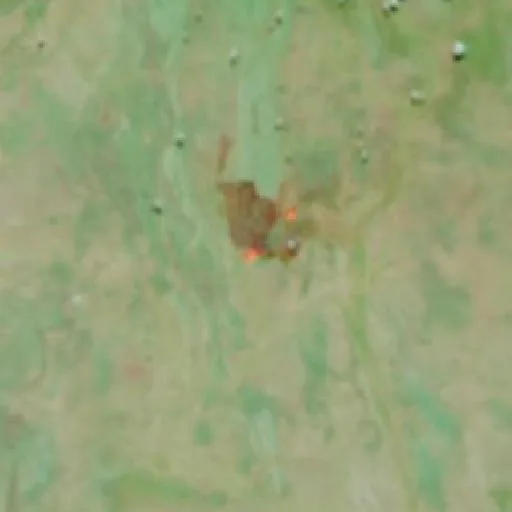


 Burning right now
“Contained” doesn’t mean out. It’s the share of the perimeter where crews stopped the spread. In most of Europe it isn’t published; “not held back yet” is an official 0%.
See all fires in Queensland →We email you when satellites detect new fire in the area. Free, no account.
Set up my alert →About wildfires in Queensland
Queensland burns earlier than the rest of the east coast. Its fire season peaks in late winter and spring, before the summer rains, and covers a huge range of country: grazing land and the Darling Downs in the south-east, the forests of the hinterland and the tropical savannas of Cape York.
Bushfires are fought by the Queensland Fire Department and the Rural Fire Service Queensland, which publish the official warnings. This map shows every fire hotspot detected by NASA satellites in Queensland, together with the named fires we track.
Today across Australia
Three fires are still burning in Australia, covering some 950 hectares between them. The biggest by far is near Dajarra, at around 500 hectares. Eight more broke out over the past week.
It is a quiet year. Australia has lost 17,369,357 hectares so far, well below its usual 34,770,448 hectares—the 16th worst figure among the 26 countries Copernicus tracks.
Around Dajarra it is hot and dry, with a gentle wind and no rain in sight over the next 48 hours.
Updated 19 Oct
Queensland wildfire season
The south-east and centre of the state usually see the most fire activity from August to November, when winter has dried the grass and the summer storms have not yet arrived. In the tropical north, the dry season (roughly May to November) brings frequent grass and savanna fires, many of them planned.
Spring heatwaves with strong westerly winds, as in 2018 and 2019, can push fires into rainforest edges and coastal communities that rarely burn.
Notable wildfires in history
- 2023 Tara and Western Downs fires
Fires in October and November 2023 forced evacuations around Tara and the Western Downs and destroyed homes in one of the worst spring fire periods in years.
- 2019 Spring 2019 fires
In September 2019 fires destroyed the historic Binna Burra Lodge in Lamington National Park and burned into Peregian Beach on the Sunshine Coast, months before the Black Summer peaked further south.
- 2018 Central Queensland fires
An unprecedented heatwave in late November 2018 drove fires around Deepwater and Gracemere, forcing thousands of people to evacuate.
Main causes & risk factors
- A dry late winter and spring before the summer rains
- Grass that grows thick after wet years and dries out in spring
- Strong westerly winds during spring heatwaves
- Very large areas of savanna in the north that burn every dry season
Safety & preparedness
- Check the Fire Danger Rating and official Queensland warnings in spring
- Follow official Queensland advice and keep a written bushfire plan
- Know your evacuation routes and leave early when told
- Keep grass short and remove flammable material around your home
Affiliate links — at no extra cost to you.
Frequently asked questions
When is bushfire season in Queensland?
In the south-east and centre it peaks from August to November, before the summer rains. In the north, the dry season from about May to November brings frequent savanna fires.
Who fights bushfires in Queensland?
The Queensland Fire Department and the Rural Fire Service Queensland, which also publish the official warnings.
Why does Queensland burn earlier than southern Australia?
Its dry season is winter and spring; by summer the storms and the wet season usually arrive.
Where does this map's data come from?
Fire hotspots come from NASA's FIRMS satellites, which detect active fires several times a day.